🌈 Rainbow Fruit Kebabs — A Colour-Sorting Snack for Hands
Threading fruit onto a stick in rainbow order looks like a snack — but it’s a colour-sorting exercise, a fine motor workout, and a hand-eye coordination challenge all dressed up as lunch. No cooking, and almost nothing that can go wrong.
📋 What’s on this page
The Learning Woven Through
Here’s the lovely thing about fruit kebabs: while your child thinks they’re just making a snack, they’re quietly building real skills. You don’t need to turn it into a lesson — the learning is already there in every step.
🛡️ Safety Notes
- Wash hands and wipe the worktop before starting.
- Wash all fruit thoroughly — berries especially.
- Cut grapes into quarters for under-5s — whole grapes are a choking hazard.
- Use blunt wooden skewers, cocktail stirrers or lollipop sticks. No sharp metal skewers.
- Supervise closely — the stick stays away from faces and eyes.
- Use a child-safe knife or dinner knife for softer fruit.
🧑🍳 Tools & Equipment
Some of the links below are affiliate links — if you buy through them I may earn a small commission, at no extra cost to you. I only ever suggest things I genuinely use and love. Full disclaimer.
- Blunt wooden skewers, cocktail stirrers or lollipop sticks
- Chopping board
- Child-safe knife or dinner knife
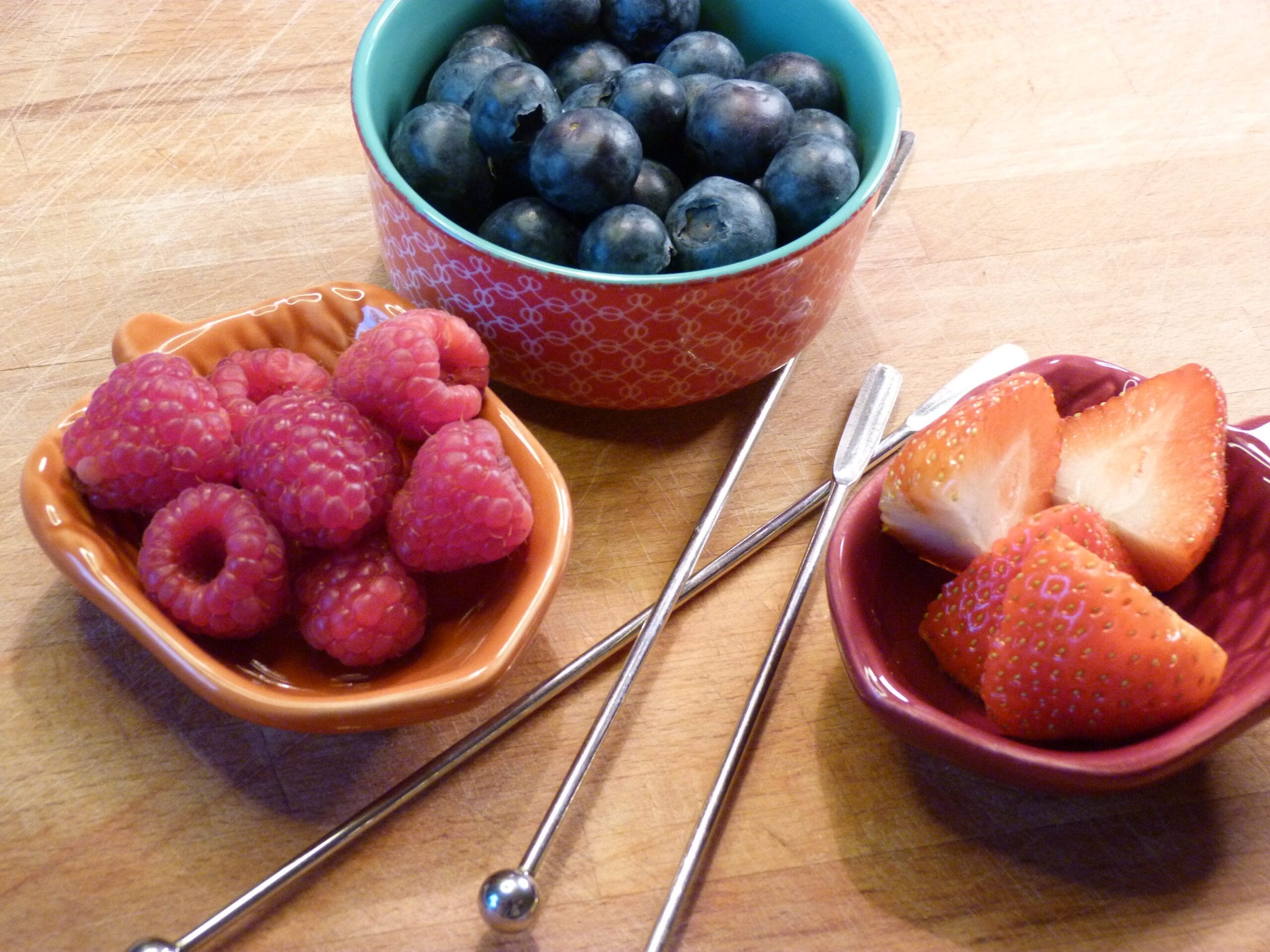
- Small bowls for sorting (one per colour)
- A small bowl for the yoghurt dip
🛒 Ingredients
- 🟣 Purple — blackberries
- 🔵 Blue — blueberries
- 🟢 Green — kiwi, green apple or quartered grapes
- 🟡 Yellow — banana slices
- 🟠 Orange — orange segments
- 🔴 Red — strawberry halves
- 🥣 Plain or vanilla yoghurt for dipping
No need to have every colour — use whatever’s in the fridge. The sorting is the learning.
🚚 Order Ingredients on Uber EatsStep-by-Step Instructions
Each step shows you how to adapt it for your child’s stage. Find where they are and follow along.
Wash Hands
Before touching any food — wash hands together. Build this habit from the very start.
Wipe the Worktop
Wipe down the surface together before you start. A clean workspace is part of cooking.
Wash the Fruit
Wash all the fruit thoroughly under running water and pat dry. Berries especially.
Chop the Larger Fruits
Chop the larger fruits into bite-sized pieces: banana into rounds, strawberries in half, apple into chunks, kiwi into wedges, orange into segments.
Sort the Fruit into Colour Bowls
Sort the fruit into small bowls — one colour per bowl. This is genuine colour-recognition and sorting work.
Arrange the Bowls in Rainbow Order
Arrange the bowls across the table in rainbow order — purple, blue, green, yellow, orange, red. Half the learning happens before the threading begins.
Take a Skewer or Stick
Hand your child a blunt wooden skewer, cocktail stirrer or lollipop stick. Point it away from faces at all times.
Thread the Fruit in Rainbow Order
Thread one piece from each colour bowl onto the stick in rainbow order, working left to right. Take your time — this is the bit that takes real concentration.
Pour the Yoghurt Dip
Pour some plain or vanilla yoghurt into a small bowl for dipping.
Admire & Enjoy
Stand back and admire the rainbow together before anyone takes a bite. Take a photo — they’ll be genuinely proud. Then dip and eat together.
🌈 The Colours of the Rainbow
The traditional order of the rainbow has seven colours, but for fruit we usually stick to six (indigo is tricky to find in a fruit bowl). The order from one end to the other: Red, Orange, Yellow, Green, Blue, Indigo, Violet — often remembered as Roy G. Biv.
The colours in fruit aren’t there by accident. Plants make those bright colours on purpose — to attract birds and animals who eat the fruit and spread the seeds. So when your child eats a blueberry, they’re tasting something a plant designed specifically to be eaten. Mind-blowing for a curious Little Chef.
💡 Tips for Parents
- Start with softer fruits. Banana, strawberry and kiwi are much easier to thread than blueberries. Build up to the tricky ones.
- Lay out in rainbow order before you start. The arranging is half the learning, before threading even begins.
- Use it as a gateway to new fruit. Add one new fruit they’ve not tried and let them put it on the stick. They almost always have a taste.
- Take a photo before they eat it. They’ll be properly proud, and you’ll have a lovely memory.
- Threading too tricky? Skip the skewer entirely and arrange the fruit in rainbow order on a plate. Same learning, no stick needed.
Frequently Asked Questions
Blunt wooden skewers, cocktail stirrers or lollipop sticks are all safe. Avoid sharp metal skewers entirely. For very young children, skip skewers and arrange the fruit in rainbow order on a plate instead — the colour-sorting learning still happens.
Always cut grapes lengthways into quarters for any child under 5. Whole grapes are a recognised choking hazard. As a general rule, fruit on a kebab should be no bigger than a 5p coin.
No — give it a go anyway. Children are far more likely to taste fruit they’ve handled, sorted and put on a stick themselves. Start with their safest fruit and don’t push the others. Just having a green grape on the same stick as a banana counts as exposure.
Threading doesn’t happen overnight. For young Explorers, try: sorting fruit into colour bowls, arranging fruit in rainbow order on a plate, helping wash the fruit in a colander, or choosing which fruit to use. The threading will come when their pincer grip is ready — no rush.
Plain or vanilla yoghurt is the classic and completely nut-free. You can also try: Greek yoghurt with a tiny drizzle of honey (over-1s only), a small bowl of melted dark chocolate, or cream cheese whipped with a splash of milk and a teaspoon of icing sugar.
Yes — use a short lollipop stick so it fits in the lunchbox. Avoid banana (it browns quickly). Use quartered grapes, berries and small chunks of melon or apple instead. Add the yoghurt dip in a separate small pot.

Every Child Can Make These
That’s the whole idea behind Stages Not Ages. It’s not about what they can do at a certain age — it’s about finding where they are today and handing them the next piece of fruit. A rainbow kebab is as good a place to start as any.
Want More Stage-by-Stage Recipes?
The Dinky Bakers Starter Kit has everything you need to get cooking with confidence — recipes written for every stage, conversation prompts, and a guide to the kitchen skills your child is building.
Get the Starter Kit — From £9 →Or grab the free Stages Not Ages Mini-Guide to try it first.