What Opening a Tin of Tomatoes Taught My Daughter
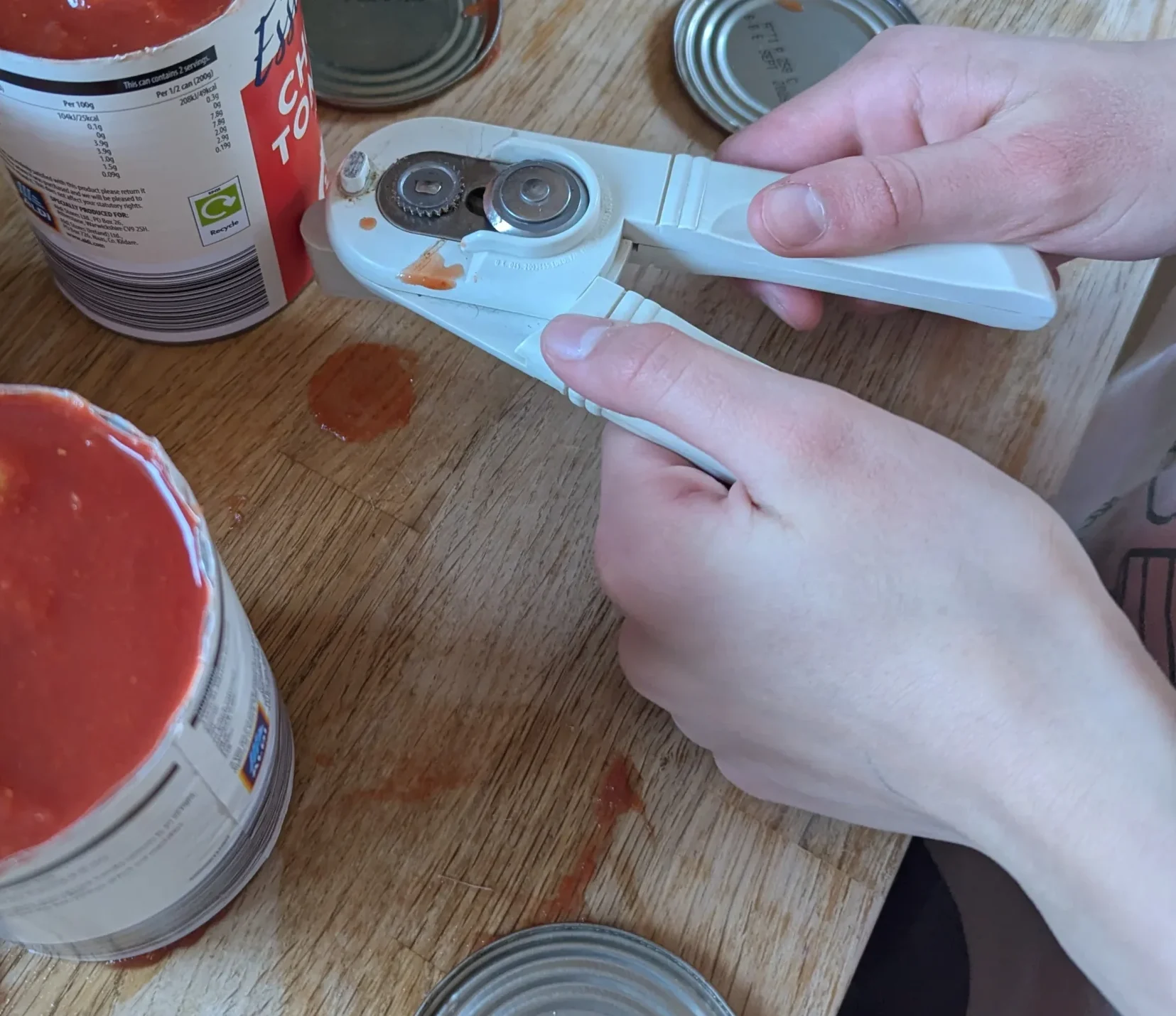
Amazing everyday kitchen learning! I was cooking dinner, and sometimes I like to batch cook. This particular recipe was a pasta sauce — five tins of chopped tomatoes into one big pot, the kind of meal you make once and eat off for three days, or freeze.
I called across to one of my children, “Would you like to help? You’re very welcome to come and join in.” I have to say, she wasn’t hugely keen. But she wandered over anyway, and the next thing I knew, she was attempting to open the tins of tomatoes ready to go in.
By the time we’d finished opening the five tins, I was genuinely fascinated by how much learning we’d covered, completely naturally. Just from opening five tins of tomatoes.
Before the meal was even finished, I’d realised that between the two of us we’d done some maths, a bit of science, prediction and estimation, and a surprising amount of fine motor work. None of it planned. None of it announced as learning. Just a child, a tin opener, and a few questions.
This post is a little walk-through of what happened. If it does one thing, I hope it helps you look at your own kitchen slightly differently — and see that cooking with your child doesn’t have to be a full recipe from start to finish. Sometimes it can be just five tins of tomatoes.
Fine motor and coordination
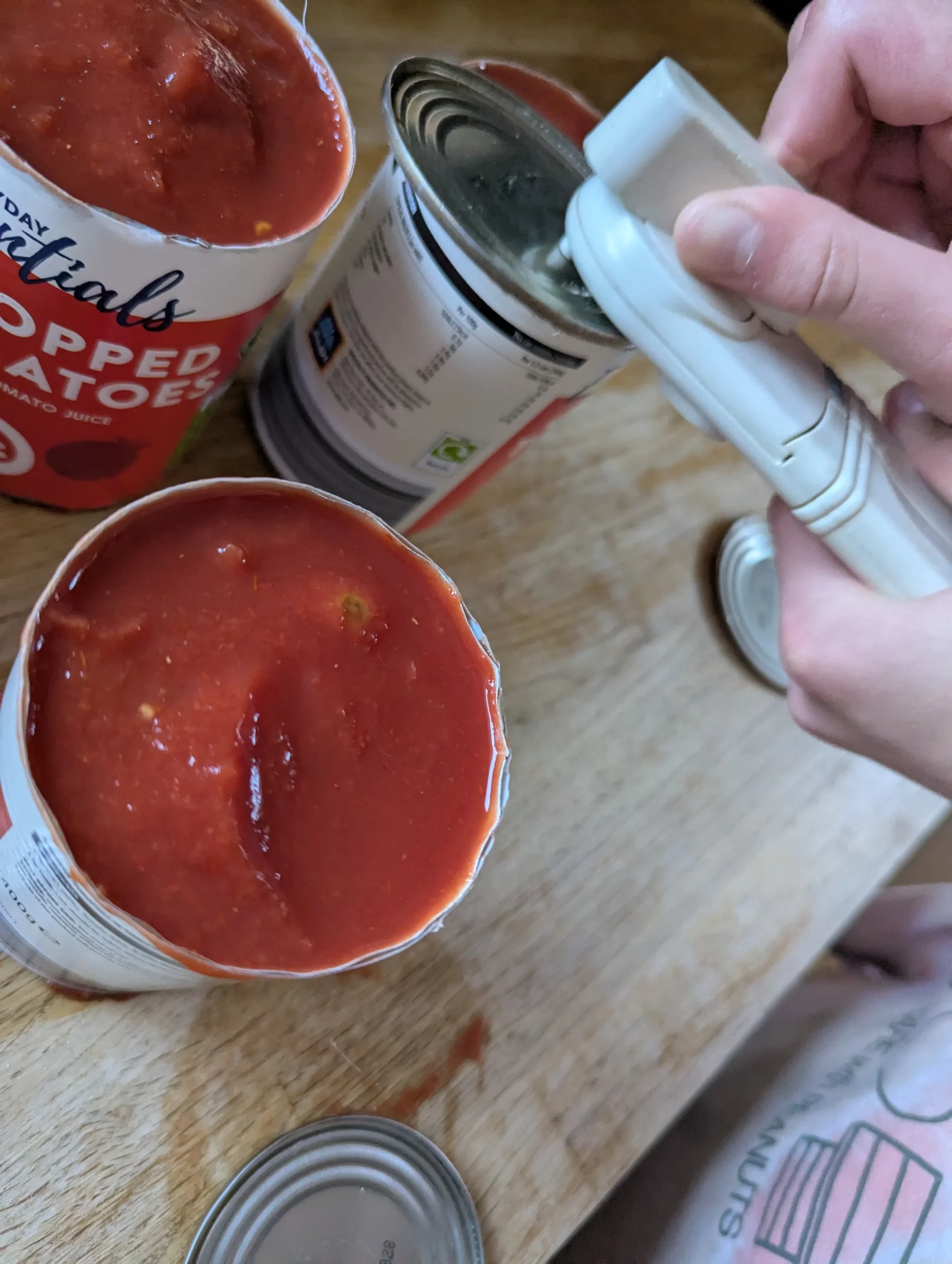
These tins needed a proper tin opener — no ring pull. And it was really interesting to watch my daughter try to tackle it.
We take it for granted, don’t we? You put it on, close the handles, turn the handle on top. Simple. Except when you’ve never really done it before — it’s not simple at all.
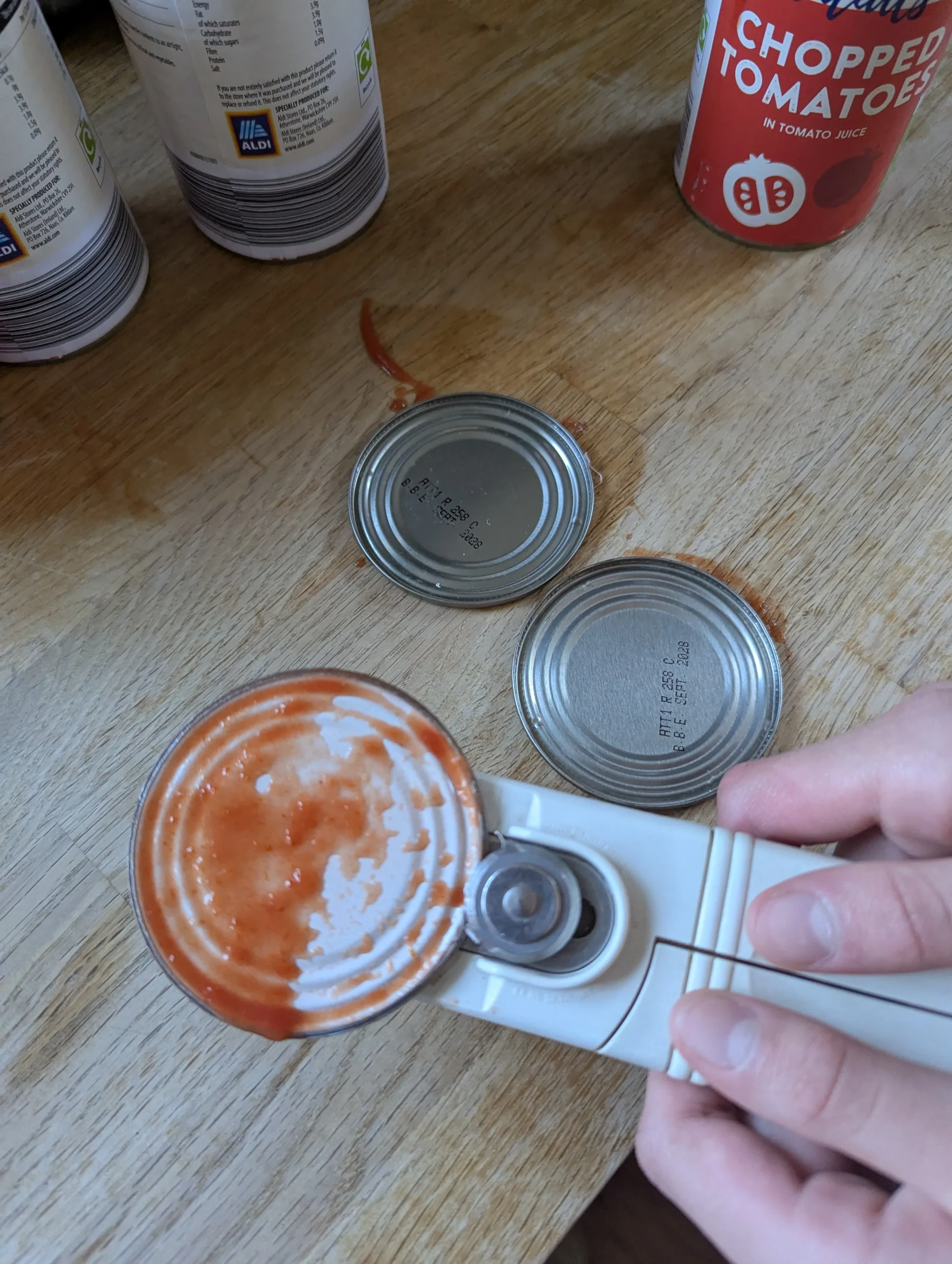
First she had to get the tin opener attached in the right place on the rim. Then squeeze the two handles closed enough to grip. Then navigate turning the handle on top while keeping the whole thing steady. She ended up holding the tin and moving the whole opener around it in circles — whatever worked.
And honestly? That’s a lot going on in one little task. The grip strength to close the handles. The coordination to attach it in the right spot. The fine motor control to keep turning without it slipping off.
I did step in to show her how, and that helped. By the fifth tin, she was getting the hang of it. Still not effortless, but getting there.
And here’s the thing that struck me. I honestly thought she’d be able to do it quite easily. I’d misread the situation as a parent — and that’s OK. You notice it, you acknowledge it, and you carry on. It doesn’t always click first time. Sometimes these things need repetition, practice, a few more goes. And a kitchen full of tins is a pretty lovely place to get that practice in.
Shape and maths vocabulary
As we were wrestling with the tin opener, I glanced down at the tins lined up on the worktop and thought — ooh, there’s a little bit of maths we could sneak in here. This one wasn’t led by her; this was me spotting the moment.
We had a quick chat. Felt like seconds, really.
“What shape is the tin?” She said circle. And I thought carefully here, because I didn’t want to say “no” — I think that’s really important. I said, “You’re absolutely right, the top is a circle — that’s a 2D shape. But what about the whole tin? What 3D shape is that?”
Cylinder. Lovely.
Then we had a look at the lid she’d just taken off, and used it to talk through three words:
Circle vocabulary — three quick words
- Circumference — the distance all the way around the edge of the circle.
- Radius — from the centre to the outer edge.
- Diameter — all the way across, through the middle.
We went over it a couple of times. Then, as we were tipping tomatoes into the pan, I just said, “Can you remember which one’s the circumference? Which one’s the radius? Which one’s the diameter?”
That’s recall of the facts, sneaked in sideways. And next time we’re using tins — or anything circular in the kitchen — we can do it again.
Prediction and the lid drop
This one she started on her own. I didn’t even realise it was happening at first.
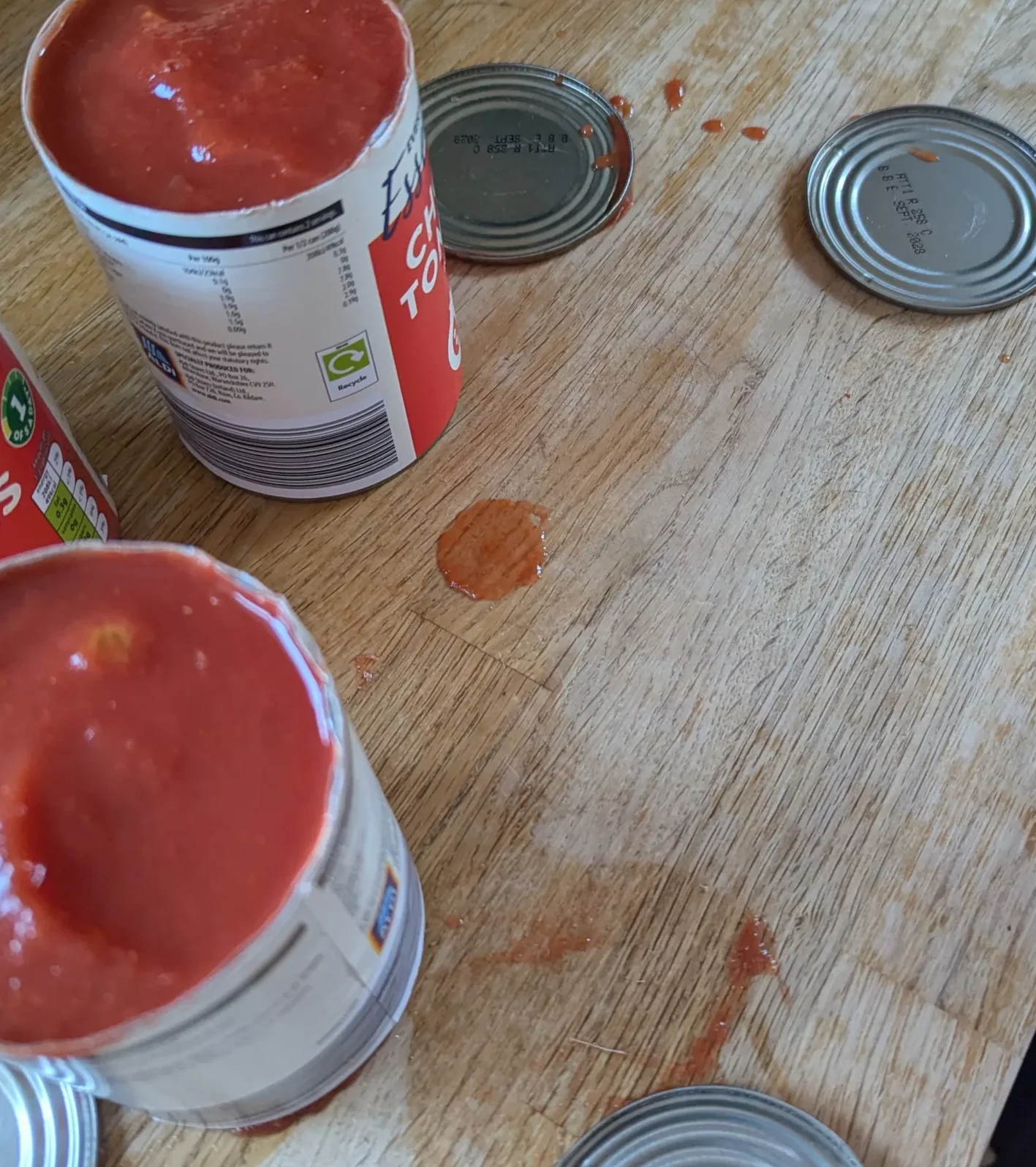
She was holding the tin opener with the lid still on it, at a reasonable height above the worktop, and dropping the lid. By about the second tin, she turned to me and said:
So then she started changing how she was holding the opener. Different angles. Different heights. Does it make a difference if I hold it like this? Nope — silver side up, tomato side down, every single time.
She was asking me, “Which way up will it land if I hold it this way?” And we were predicting together. Would it be the same as the others? Or different this time?
She was genuinely excited and curious by this point. Why is it always landing that way? What’s happening? We talked about why it might be — the weight of the lid, where the tomato residue sits, the way it flips as it falls.
It felt like one of those little science-right-in-front-of-your-eyes moments. Brilliant. And not something I’d planned for even a second.
The pink stuff question
The next question came out of nowhere: “Mum, what’s that pink stuff on the inside of the tin?”
And for just a split second I thought — oh gosh, pink stuff, have we got a dodgy tin? But no. When I had a proper look, it’s just the plastic coating on the inside of the tin, which protects the food from the metal.
I’d actually never really thought about it before. You assume a tin is tin all the way through, inside and out. But it’s not. And she’d noticed something I hadn’t, and asked a question I didn’t fully know the answer to.
💡 It’s OK not to know
I get asked questions all the time that I don’t know the answer to straight away. And that’s absolutely fine. I’ll say, “I’m not sure actually — shall we have a look together?” Then we head to Alexa, or my laptop, or my phone, and we find out.
I think it’s really good for our children to see that we don’t always know the answers — and that we keep learning even when we’re older. Because learning is fantastic, isn’t it? At any age.
What it all added up to
From just asking my daughter if she wanted to help with the cooking — before we’d even finished making the meal — I realised how much ground we’d covered. Maths. Science. Prediction. Estimation. Fine motor skills. Perseverance. Curiosity. Recall.
It was quite incredible, honestly.
And so much of it was led by her. She was the one querying why the lid was landing silver-side-up. She was the one asking about the pink coating. I just happened to notice the shape moment and drop it in.
Cooking with our children doesn’t have to mean a full-on recipe from start to finish. Sometimes it’s these little light-bulb moments, where they come in to do one small thing — opening a tin, tearing some herbs, pouring the milk — and that one thing sparks something much bigger.
🌟 Stage Spotlight
A quick note on safety: a tin opener and a used tin lid have sharp edges, so opening tins sits firmly in the Little Chef range, with an adult close by and a clear chat about the sharp bits. But there’s something here for every stage.
Looking & Naming
- Picks a tin out of the cupboard
- Looks at and names the 3D shape
- Talks about the circle on top
- Finds three other circular things in the kitchen
- Watches and predicts which way the lid lands
Pouring & Counting
- Pours the opened tins into the pan
- Counts how many tins you’ve used
- Estimates how full the pot looks
- Joins in the circumference/radius/diameter chat
- Helps predict the lid drop
Opening & Leading
- Opens the tins (with supervision and the safety chat)
- Leads the prediction experiments
- Asks and researches the science questions
- Recalls and explains the circle vocabulary
- Talks through 2D vs 3D shapes
❓ Common questions
What can a child learn from opening a tin?
A surprising amount: fine motor control and grip strength from the tin opener, 2D and 3D shape vocabulary (circle, cylinder, circumference, radius, diameter), prediction and observation from watching how the lid falls, and curiosity from noticing things like the coating inside the tin.
Is using a tin opener safe for children?
A tin opener and a used tin lid have sharp edges, so this is a Little Chef stage activity with an adult close by and a clear chat about the sharp bits beforehand. Younger children can still take part by handling unopened tins, talking about the shapes, or pouring and counting once the tins are open.
How do I add learning to cooking without it feeling like a lesson?
Keep it light and conversational. Ask a question, follow their curiosity, and drop in a word or two of vocabulary as you go. You don’t need a full recipe — sometimes one small task like opening a tin or tearing herbs sparks plenty of learning on its own.
What if my child asks a question I can’t answer?
That’s a good thing. Saying “I’m not sure, shall we find out together?” models that learning never stops. Look it up together — it shows your child that curiosity matters more than always knowing the answer.

Why not this week? 💛
Pick something. Anything, really. A tin out of the cupboard. A piece of fruit on the side. A bag of rice. You don’t even have to open it to get some of the learning out of it — just look at the shape, the 2D and 3D, the circumference and radius if it’s circular. Then find something else in the kitchen to compare it to.
One small object. One short conversation. One child quietly learning without realising it.
Tag me on TikTok or Instagram and let me know how you got on.
— Laura x